On Draupadi's disrobing and the cowardice of Pandavas
How do you set the Mahabharata's most dehumanizing moment to music? A close reading of Ramrang's 'Mero Pat Rakho Murari' Draupadi's plea in Tilak Kamod.

Two couplets by Pt Ramashreya Jha prompted me to write this post, but, as anyone looking at a blank page can attest, the words remained elusive. Until I found this quote.
“History is not the past. It is the present. We carry our history with us. We are our history. If we pretend otherwise, we are literally criminals.”James Baldwin - Noted American civil rights activist and writer.
If there is one marker of progress across the last 5,000 years of any society, it is the empowerment, read: education, of women. The worldwide decline in birth rates traces back to a handful of developmental shifts, chief among them women’s education and reduced infant mortality. So while economists huff and puff over the end of the demographic dividend in China and India, I’d argue the underlying cause is something to celebrate.

Draupadi, Women’s Safety, and India
Years ago, a book inspired me to build an app for women’s safety. In the process, I learned about the unsettling things that happen to women every day, in countries around the world. India was the elephant in the room → female infanticide, public harassment, moral policing, dowry deaths, honor killings. It felt like India had invented its own vocabulary for atrocities against women. 700mn+ women in India live this experience every day.
I distinctly remember watching Draupadi’s vastraharan (Draupadi’s disrobing) on Doordarshan as a child. The scene was sanitized for family viewing, but I remember how emotionally charged it was — and I especially remember the faces of the Pandavas, Draupadi’s five husbands, sitting in silence, disgusted with themselves, not lifting a finger while the Kauravas guffawed at her plight. It made no sense to me. These were the protagonists: Arjuna, the ace archer; Bheema, the mace-wielder. Their inaction baffled me. The normalization of the inaction of ‘heroes’ during the time of crisis, both a personal one and as it relates to one’s family due to vice, never sat well.
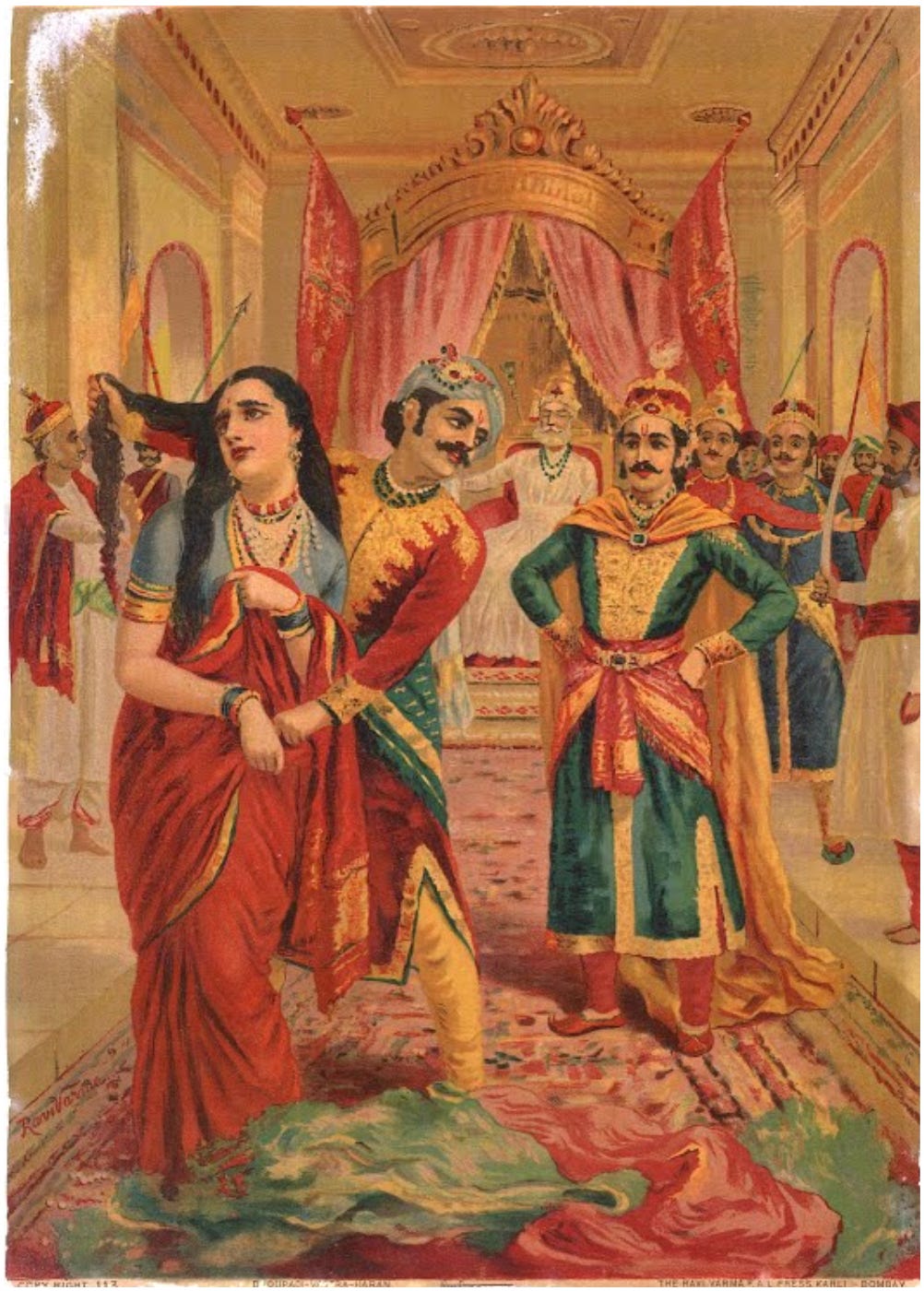
This section of the Mahabharatha is sometimes considered a catalyst for the bloody war that followed. It might as well be, given that this emotional trope remains commonplace in Indian movies. The villain may do any number of evil things, but it’s usually the outraging of a woman’s modesty that ticks off the hero, and he ends up kicking ass.
Considering all this history and rhetoric, imagine you’re tasked with writing a couplet and setting it to music. Each a formidable challenge, but one that Pt Ramashreya Jha does with such elegance.
मेरो पट राखो मुरारी
Mero pat rakho Murari
Protect my garment (and my honor), O Murari
भीषम-द्रोणा बैठे पाँवड़ा ह्वै
Bheesham-Drona baithe panwara hvai
Bhishma and Drona sit turned into foot-cloths — mute, trampled over, inert
सूरा सभा सब क्रूरा ह्वै बैठे
Soora sabha sab kroora hvai baithe
The assembly of heroes sits, every one of them turned cruel
“रामरंग” बैठे पति पारथा पथरा ह्वै
“Ramrang” baithe pati Paratha pathara hvai
Says Ramrang: her husbands, the Parthas, sit petrified — turned to stone
This composition is written from Draupadi’s perspective and is a masterclass in writing. The entire song revolves around the word Pat meaning Saree, also used as a pun to mean Patha/honor. The meaning of the couplet reads: The elders, Bheeshma and Drona, are sitting like foot cloths; the entire gathering of heroes is sitting mute - being actively cruel. The husbands are stones petrified and not acting in her honor. The premise itself is contrived to the point of absurdity: husbands wagering their wife at dice, losing, and then showing more loyalty to the game than to their own. A truly dehumanizing moment, if ever there was one. Now imagine describing this in Khamaj, well almost, Tilak Kamod. Metaphorically, that’s akin to using 90s Shaan for a sad ballad.
There’s an explicit reference to Murari (Krishna), a God, who isn’t present but seems the only person capable of acting to save Draupadi from her cruel fate. Bonus, there’s a resolution in the drut bandish that follows where Hari comes to Draupadi / Parashakti’s defense.
On Guru Purnima, it’s only fair I pay tribute to my teacher who has performed this composition by Pt Ramrang. In other Guru Purnima news, I have started learning shastriya sangeet from another teacher in Bengaluru. Ask me more when we meet in person. Until then, enjoy this composition. Speak to you soon!
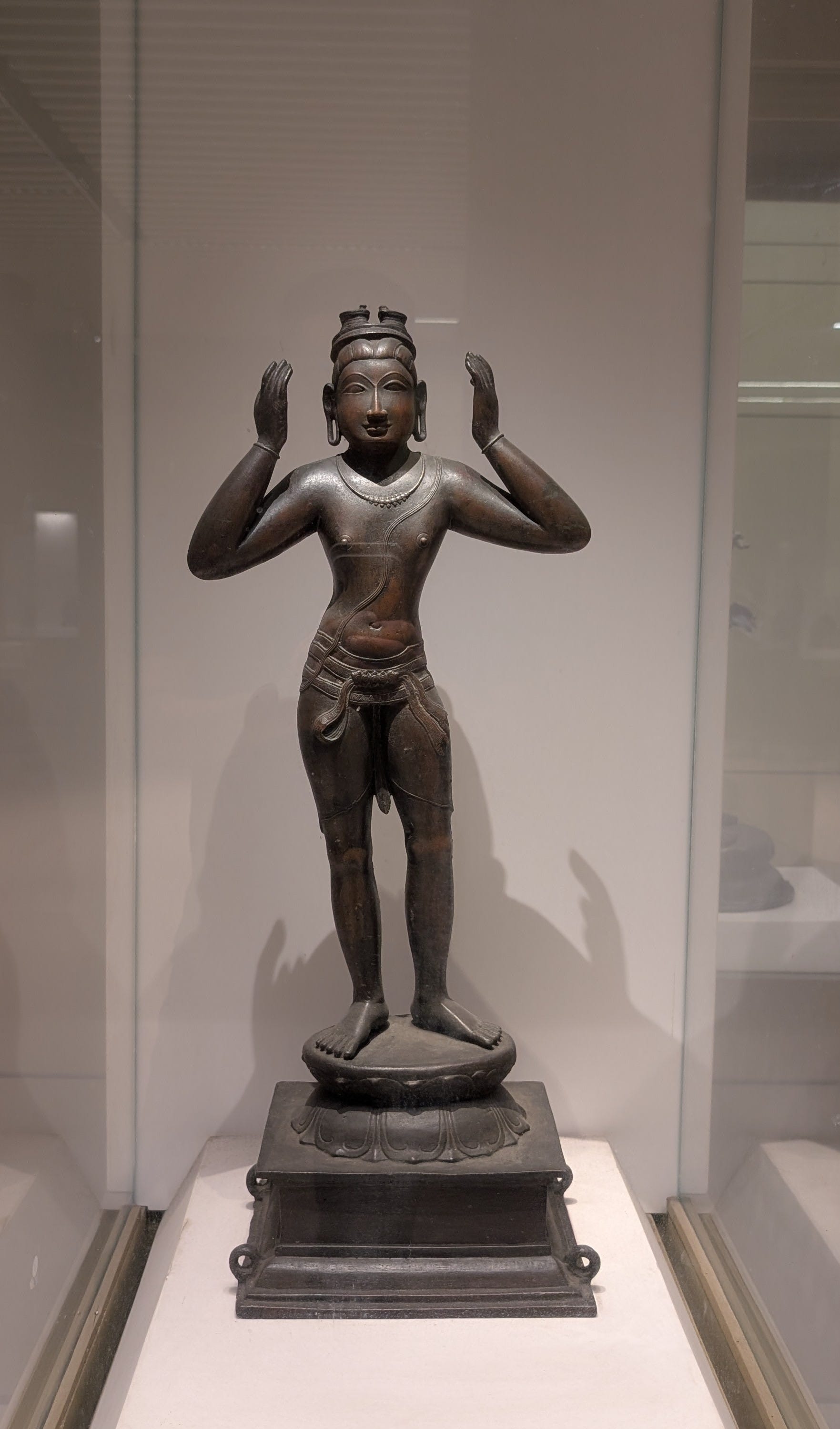
Enjoy this 14th-century bronze from Vijayanagara, featuring Bharata - who’s responsible for so many things - the name of our country, the lineage of Pandavas and Kauravas, Raam.. ok let’s not go there now.